Getting Started with Grilled Chicken
I still clearly remember the first time grilled chicken really won me over. It was at a casual summer barbecue with friends, the air filled with smoky aromas and the steady hiss of meat on the grill. What made that chicken memorable wasn’t fancy seasonings or elaborate sauces—it was the perfect combo of crispy, charred edges and tender, juicy meat inside. Since then, grilled chicken has become my go-to for meals that feel both comforting and a little special. It’s quick enough for a weeknight dinner but impressive enough to serve when guests drop by. The best part? You don’t need fancy equipment—just a simple grill, some decent weather (think spring or early fall), and a solid recipe. This guide is packed with tips and tricks I’ve picked up through years of cooking, testing different methods, and getting my hands dirty to help you nail delicious grilled chicken every time. Whether you’re just starting out or already love grilling, there’s something here for you.
Why This Recipe Works for Everyone
Grilled chicken is a dish that pops up in so many cuisines—from the smoky satays of Southeast Asia to the charred shish tawook found around the Mediterranean. It’s a go-to for good reason: it’s versatile, delicious, and pretty healthy since the fat drips away while it cooks. What I love about grilled chicken is how it’s basically a blank slate—you can dunk it in tangy citrus marinades, spice it up with cumin and coriander, or just keep it simple with salt and pepper. Over the years, I've learned it’s comfort food with a bit of a twist: if you're not careful, it can dry out or get burnt from flare-ups. But nail the timing and technique, and it’s deeply satisfying every single time.
What You’ll Need
When grilling chicken, the choice of cuts makes a bigger difference than you might think. I usually go for bone-in thighs and drumsticks—around 800 grams total—because they hold onto their juiciness better than breasts. But if you’re in a hurry, boneless breasts or thighs will do just fine; just keep an eye on your cooking time so they don’t dry out.
When it comes to the basic marinade, here’s the mix I usually go for:
- 3 tablespoons of extra virgin olive oil
- 1 tablespoon of freshly squeezed lemon juice or 2 tablespoons of apple cider vinegar
- 4 garlic cloves, minced
- 1 teaspoon smoked paprika
- 1 teaspoon ground cumin
- 1 teaspoon salt
- 1/2 teaspoon black pepper
- A handful of fresh parsley, chopped
If you want to kick things up a notch, try tossing in a teaspoon of chili flakes for some heat or swap out parsley for fresh thyme or oregano—depends on what you’re feeling that day. Fresh herbs really brighten the whole dish, trust me. Also, don’t skimp on the chicken quality. A good organic bird, which usually costs between ₹300 and ₹500 depending on where you shop, makes a huge difference in flavor and texture. I’ve found that local markets often beat big supermarkets when it comes to freshness.
How to Cook It Step-by-Step
Let me take you through how I grill chicken from scratch. It usually takes me about 15 minutes to get everything ready and then around 25 to 30 minutes on the grill to get that perfect char.
Trimming and Brining
I start by trimming off any extra fat or loose skin. If you have a little time, try a quick brine: mix 2 tablespoons of salt and 1 tablespoon of sugar into a liter of water, then soak the chicken for half an hour. It’s not a must, but it really helps the chicken stay juicy while grilling. After brining, I always dry the chicken well with paper towels—that step’s key if you want a nice, crispy crust.
Marinating
Next, I mix up a marinade in a big bowl—olive oil, lemon juice, garlic, paprika, cumin, salt, pepper, and some fresh herbs. I toss the chicken pieces in until they’re well coated, then cover and pop it in the fridge for at least two hours. If you have more time, four to six hours is ideal. I’ve even left it overnight sometimes, though beyond that, the texture tends to get a bit too soft for my taste.
Preheating Grill
When I grill, I usually go with charcoal—it takes about 20 minutes to get those coals nice and hot. You’re aiming for a medium-high heat, roughly 200°C. If you’re using a gas grill, just preheat it on medium-high for around 10 to 15 minutes. Set up your grill so one side has direct heat and the other side is cooler, giving you that two-zone setup to play with.
Grilling
Start by placing the chicken skin-side down over the direct heat. Let it cook undisturbed for about 6 to 7 minutes—that’s what gives you those beautiful grill marks. Flip it over and cook for another 5 minutes. Then, move the chicken over to the cooler side of the grill and cover it up. Let it cook there for 10 to 15 minutes depending on how thick your pieces are. I always double-check with a meat thermometer—once it hits 165°F (74°C) inside, you’re good to go.
Resting
Once the chicken’s off the grill, don’t skip resting it—give it at least 10 minutes. This little pause lets the juices spread evenly, so every bite stays nice and juicy. After testing this out plenty of times, I can say resting isn’t just a suggestion; it’s key for tender, flavorful chicken.
Tips for Perfectly Grilled Chicken
Keeping chicken juicy on the grill is all about balancing heat and moisture. I’ve learned that a good brine and marinade definitely help, but the real trick is not rushing it. The outside cooks quickly over the flames, so you have to give the inside enough time to catch up without burning the skin. Patience here really pays off.
Flare-ups can be a real nuisance when grilling chicken. Those sudden flames caused by dripping fat can quickly char the skin if you’re not careful. When that happens, I usually move the chicken to a cooler spot on the grill and keep a spray bottle of water nearby to calm the flames. Long tongs are a must, too—perfect for flipping pieces fast and keeping control.
Cooking with indirect heat really changes the game. You get that perfect char from the direct flames, but the slower, indirect heat keeps the inside juicy and tender. It’s the best of both worlds.
A few handy tools can make grilling way less stressful and a lot more fun:
- A good pair of tongs for flipping without piercing meat
- An instant-read meat thermometer (₹800-₹1500 online) to avoid guessing doneness
- A silicone brush for basting with leftover marinade or melted butter
To get everything cooked just right, start with the thicker chicken pieces first. Then, after about 5 to 7 minutes, toss on the smaller cuts. This way, everything finishes together without overcooking.
Flavor Twists and Ingredient Swaps
I love playing around with different marinades to keep things interesting. Here are a few swaps I've tried that turned out great:
- Asian-inspired marinade: 2 tablespoons soy sauce, 1 tablespoon sesame oil, 1 teaspoon grated ginger, 1 teaspoon honey. Keep marinating time shorter, about 2 hours, because soy sauce can toughen meat if left too long.
- Mediterranean style: 3 tablespoons olive oil, juice of 1 lemon, 1 tablespoon oregano, 3 cloves garlic minced, salt, pepper.
- BBQ flavor: 4 tablespoons ready-made BBQ sauce mixed with 1 teaspoon smoked paprika and 1 tablespoon apple cider vinegar.
- Spicy herb blend: Add 1 teaspoon chili powder and 1 teaspoon dried thyme.
When it comes to swapping out chicken, turkey thighs or drumsticks make a solid alternative—they just need a bit more time on the grill, about 40 minutes. If you're curious about plant-based options, some brands have grilled "chicken" replacements that hold up surprisingly well on the grill. The taste and texture aren't exactly like the real thing, but they’re a decent choice if you’re looking to skip meat.
When grilling indoors, I’ve found that a cast iron grill pan or the oven broiler does a great job of getting close to that outdoor char. Just remember, it takes a bit longer than outside, so be patient. And don’t skip preheating the pan — a good hot pan is key to getting that perfect sear.
Tasty Serving Ideas and Pairings
Grilled chicken goes well with so many sides, but here are a few of my go-to favorites that really bring out the flavors:
Grilled Vegetables
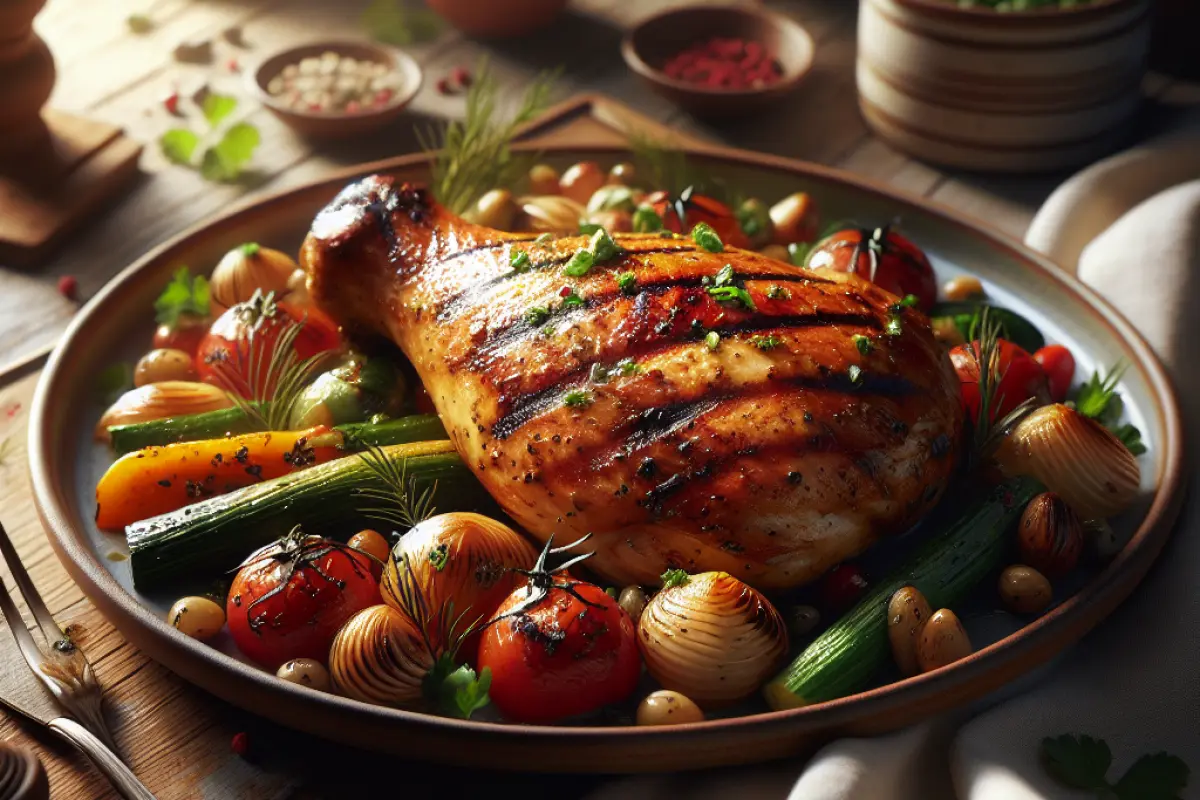
Zucchini, bell peppers, and red onions get a nice char when tossed in olive oil and grilled right alongside the chicken, adding a smoky sweetness and a satisfying crunch you’ll want to savor.
Fresh salads
A simple salad of chopped cucumber and tomato, dressed with fresh lemon juice and a drizzle of olive oil, perfectly cuts through the warm, smoky flavors of the chicken.
Grain bowls
I like to serve it all with quinoa or couscous, stirred together with fresh herbs and a handful of toasted pine nuts to add a little extra bite and nuttiness.
Sauces
I usually like to add a good dollop of tzatziki, chimichurri, or a chipotle mayo with a smoky kick—it just brings the whole dish to life.
When it comes to drinks, lighter reds like Pinot Noir or a chilled rosé are perfect companions. If you’re more of a beer fan, a pale ale or a wheat beer pairs nicely without stealing the show. Not drinking alcohol? Try sparkling water with a squeeze of lime or some refreshing iced mint tea.
For casual get-togethers, I love serving everything family-style on a big wooden board—makes it feel cozy and inviting. But for special occasions, slicing the chicken and arranging it neatly with a scatter of fresh parsley and lemon wedges really steps things up. Simple touches like that make the meal look as good as it tastes.
Mistakes You’ll Want to Dodge
Trust me, I’ve stumbled more than once, so you’re definitely not the first! Here are some common slip-ups I’d suggest steering clear of:
- Don’t overcrowd the grill. If you squeeze too many pieces together, heat can’t circulate properly, causing uneven cooking.
- Never skip the marinade or let it sit for too short a time—less than 30 minutes won’t infuse enough flavor.
- Avoid blasting the heat too high. It’s tempting to cook chicken fast, but you risk burnt skin and undercooked interiors.
- Don’t guess internal doneness; use a meat thermometer. Undercooked chicken is unsafe, and overcooked one turns dry.
- Finally, resting the chicken post-grill is essential. Skipping this wastes juiciness you worked hard to keep.
Tips for Storing Food and Prepping Meals
Leftover grilled chicken is pretty common, so knowing how to store it right is key. If you tuck it away in an airtight container, it should last about 3 to 4 days in the fridge. Planning to freeze some? Slice it into portions first, wrap each piece tightly in foil or pop them into freezer bags, and you'll want to use them within 2 to 3 months for the best taste.
Reheating grilled chicken can be a bit tricky—microwaves tend to dry it out fast. I usually warm it up gently in a covered pan over low heat. Adding a little splash of broth or water helps keep it juicy and prevents it from turning into a rubbery mess.
Grilled chicken is a fantastic ingredient for meal prepping—it's versatile and holds up well over a few days. You can toss it into salads, wraps, or even stir-fries, making quick lunches or dinners a breeze on busy days.
- Toss with greens and grains for quick lunches
- Wrap in flatbreads with yogurt sauce for grab-and-go meals
- Add to pastas or stews to extend the protein boost
To save yourself some time, whip up a batch of marinade and keep it in the fridge—it’ll last up to a week. I like to marinate chicken at least a few hours before grilling, but if you’re pressed for time (or planning ahead), popping it in the fridge overnight works like a charm.
Adjusting for Dietary Needs
If you're avoiding gluten, skip the regular soy sauce in your marinade unless you swap it for tamari, which is gluten-free. I’ve found that tossing in a bit of gluten-free mustard or vinegar keeps the flavor interesting without any gluten worries.
If you’re watching your salt intake, try cutting the salt in half and kick things up with fresh herbs or a squeeze of lemon juice. It’s surprising how much flavor you can get without relying on salt alone.
If you need to avoid allergens like nuts or dairy, just leave out any nuts or yogurt-based sauces in your sides and marinades. Chicken itself doesn’t usually trigger allergies, but be careful about cross-contact when prepping.
If you’re on keto or paleo, grilled chicken is a natural fit—especially when paired with low-carb veggies and some healthy fats. I like swapping out grains for cauliflower rice; it’s an easy way to keep meals satisfying without the carbs.
FAQs
Can you grill chicken straight from frozen? I’d say it’s better to thaw it first. Leaving chicken frozen on the grill usually means the outside cooks too fast while the inside stays raw—a recipe for disappointment. I usually pop mine in the fridge overnight, and it cooks way more evenly that way.
What’s the deal with bone-in versus boneless chicken on the grill? Bone-in takes a bit longer but holds onto its juiciness better, plus the bone adds a little extra flavor punch. Boneless cuts cook quicker, but you have to keep an eye on them or they can end up dry and tough.
How long should you marinate chicken to get good flavor? I’d say at least a couple of hours, but around 4 to 6 hours really lets the seasoning sink in. Going overnight is fine, but if you leave it over 24 hours, the texture can get a bit off—like mushy, and nobody wants that.
Wondering if you can grill chicken without a fancy outdoor grill? You absolutely can! I’ve found that a heavy grill pan or even your oven’s broiler can do the trick. They do need a bit more attention—think of it as babysitting your chicken—but the results? Definitely worth it, with those nice char marks and smoky flavor.
Not sure if your chicken is cooked through without a thermometer? A simple trick is to poke the thickest part and check the juices—if they run clear, you’re good. Cutting into the meat to check color and texture helps too, but honestly, a thermometer takes the guesswork out of it and gives you peace of mind.
Can you rely on store-bought marinades, or are homemade ones better? Both have their perks. Store-bought marinades are super convenient when you’re short on time. But if you want to skip the extra additives and tweak the flavors exactly how you like, making your own marinade at home is the way to go. I love customizing mine with fresh herbs and spices.
Looking for easy sides to pair with grilled chicken? I like to keep it simple with grilled vegetables—think bell peppers, zucchini, or asparagus tossed in olive oil and a pinch of salt. Fresh salads dressed with lemon juice or tangy yogurt are refreshing and quick to whip up. And don’t overlook grains like couscous or quinoa—they cook fast and soak up any extra marinade or dressing beautifully.
Conclusion
Grilled chicken is one of those dishes that feels casual but can really shine when done right. It’s perfect for a quick weeknight dinner or when you’ve got friends over on the weekend. The trick is paying attention to the heat and timing—too hot, and you’ll scorch the outside while the inside stays undercooked. I always recommend trying out different marinades and methods; cooking should be about tweaking things until it suits your taste. If you’re the type who prefers solid, no-fluff recipes, this guide is for you. Give it a go, adjust as you like, and most importantly, have fun with it. If you want to dive deeper, check out my post on "Grilling Basics for Home Cooks: Getting Started with Charcoal and Gas." And if you're looking to mix up your marinades, I’ve got some easy recipes that’ll add a punch of flavor. Don’t forget to subscribe for more down-to-earth recipes and cooking tips, and follow me on social for more kitchen stories and ideas.
If this topic interests you, you may also find this useful: https://www.cravediary.com/blog/master-the-art-of-how-to-make-dosa-easy-homemade-recipe